Practice note
Room Layout, Timing, and Transport: The Logistics Decisions That Decide Attendance
Venue budget lines that never make the funding narrative — parking, room shape, start time, and the walk from the bus stop — are often what determines whether a connection programme fills a room.
Institute for Social Connection
A programme manager will defend the facilitator’s salary line to a funder without blinking, but will cut the taxi fund, shrink the room booking to save £40 a week, or schedule a group for 2pm on a Tuesday because that is when the hall was free. None of those decisions show up in a logic model. All of them show up in the register.
This is a practice note about the logistics that get treated as administrative detail and are actually programme design. If you are building a budget for a connection programme — a walking group, a peer support circle, a men’s shed, a bereavement café — the venue and transport decisions you make before anyone has RSVP’d will do more to determine who actually shows up than the content of the session.
Why this gets cut first, and why that is backwards
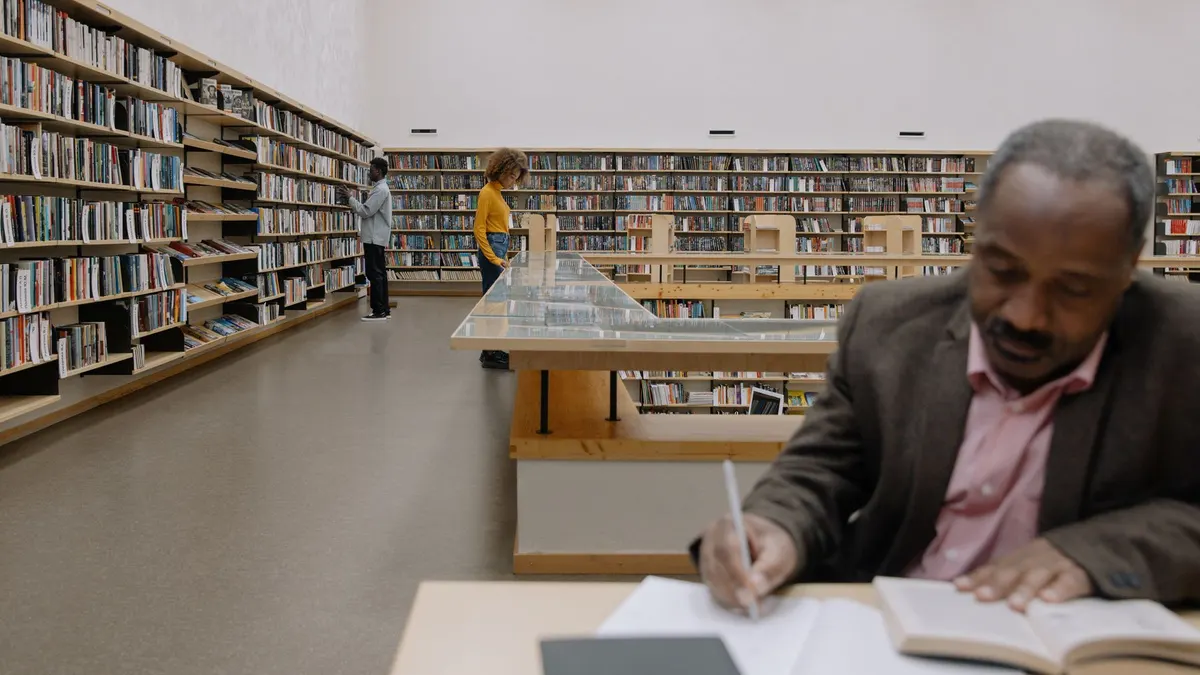
Budgets get trimmed under pressure, and the venue line is an easy target because it looks like overhead rather than delivery. Eric Klinenberg’s argument about social infrastructure is that libraries, parks, and other shared physical spaces measurably shape how much contact people have with each other — the physical setting is not a container for the intervention, it is part of the intervention. Ray Oldenburg made a version of the same point decades earlier about the “third place”: informal public gathering spots work because of specific, unglamorous properties — proximity, low cost of entry, tolerance for coming and going — not because someone ran a good session inside them.
If the room fails on those properties, the facilitation cannot fully compensate. A skilled group leader in a badly chosen venue will spend the first fifteen minutes managing the venue’s problems — people can’t find the entrance, latecomers can’t get in quietly, the layout puts six people in a circle designed for twenty — instead of running the group.
The five decisions that matter most
1. Distance from a stop, not distance from a postcode. “Five minutes from the station” means nothing if it is a five-minute walk uphill with no dropped kerb. For older adults and people with mobility limitations, the walk itself is often the deciding factor, not overall distance. Ask about the actual route, not the map distance.
2. Whether the room can be found without asking. A community hall with three identical doors and no signage costs you first-time attendees before the session starts. People who are already anxious about attending something new will not knock on a stranger’s office door to ask where the group is. They will leave.
3. What happens between the street and the seat. A locked front door with a buzzer, a reception desk that does not know the group exists, a long unmarked corridor — each is a point where someone can quietly turn around. The AARP Foundation’s 2018 survey of adults 45 and older found that people who report ever speaking to their neighbours are lonely at roughly half the rate of those who never have (33% versus 61%), which is a reminder that the barrier to connection is very often the small, mundane threshold moment, not a lack of desire to connect.
4. Room shape and size relative to group size. A room built for eighty people holding a group of twelve produces exactly the atmosphere you don’t want: sound disappears, eye contact is impossible, latecomers feel conspicuous. Undersized rooms are worse for a different reason — no room to arrive without immediately being seen and spoken to, which is a real deterrent for a first visit.
5. Timing against the transport and care schedules of the people you are trying to reach. A 10am session works for retirees with a car. It does not work for a parent who has just dropped children at school and lives twenty minutes from the venue by bus, or a shift worker whose day starts at 11. Timing decisions are frequently made around facilitator or room availability, not participant reality.
An evidence-status table
| Claim | Evidence status |
|---|---|
| Physical, easily reached community spaces increase informal social contact | Reasonably well supported — argued at length by Klinenberg and Oldenburg from observational and historical evidence, though neither is a controlled trial |
| Structured, purposeful in-person activity produces more benefit than passive social contact | Supported by qualitative synthesis (social prescribing perceptions review, 2022), not by controlled comparison |
| Neighbourly, low-threshold contact is associated with lower reported loneliness | Supported by a large national survey (AARP Foundation, 2018), correlational not causal |
| Specific venue features (signage, room shape, transport distance) causally affect attendance | Not directly tested in the literature supplied here — this section is inference from social infrastructure theory and practitioner experience, not a measured finding |
That last row matters. Nobody has run a controlled trial varying signage or room shape and measuring attrition. What follows is inference from adjacent evidence and from what practitioners routinely report, not a citable causal claim. Treat it as a checklist to pilot, not a guarantee.
What this means in practice: before you finalise a venue, walk the actual route a first-time attendee would take, from the nearest bus stop or car park to the seat, at the time of day the session runs. If you cannot describe that walk in detail, you have not scouted the venue — you have looked at a room.
The named failure mode: the borrowed room
Call it the borrowed room problem. It happens when a programme is hosted in space that belongs to someone else’s institution — a GP surgery meeting room, a corner of a library, a spare classroom — booked because it is free or cheap, with no control over signage, no say over who is on reception that week, and no guarantee the room is available at the same time next month. The session content can be excellent and attendance still collapses, because every week is a slightly different logistical puzzle for the participant to solve. Funders should ask, specifically, whether the venue is consistent week to week, not just whether it is booked.
What a venue line item should actually fund
A defensible venue budget covers more than room hire: transport support (bus fares, a shared taxi run, mileage for a volunteer driver), signage printed and put up each week, someone tasked with meeting first-time attendees at the door for their first two or three visits, and a standing booking rather than a week-by-week scramble. None of this is glamorous. All of it is cheaper than the cost of running a group that nobody returns to.
What this does not solve
Good venue and transport decisions remove barriers for people who have already decided to try the group. They do nothing for the people who never heard about it, who assume it isn’t for them, or who were never referred in the first place. Reach is a separate problem from retention, and logistics fixes belong to retention. A perfectly located, perfectly signposted room will still only serve the people who make it through the door once — and most programme design, however well it is logistically executed, reaches people who were already looking for something like it.
Sources
- The Great Good Place: Cafes, Coffee Shops, Bookstores, Bars, Hair Salons and Other Hangouts at the Heart of a Community
- Palaces for the People: How Social Infrastructure Can Help Fight Inequality, Polarization, and the Decline of Civic Life
- Loneliness and Social Connections: A National Survey of Adults 45 and Older
- Do People Perceive Benefits in the Use of Social Prescribing to Address Loneliness and/or Social Isolation? A Qualitative Meta-Synthesis