Practice note
Why the General Mixer Fails the People Who Need It Most
Gallup and Meta's new global connection data shows most people already feel connected. That should change how you design programmes meant to reach the minority who don't.
Institute for Social Connection
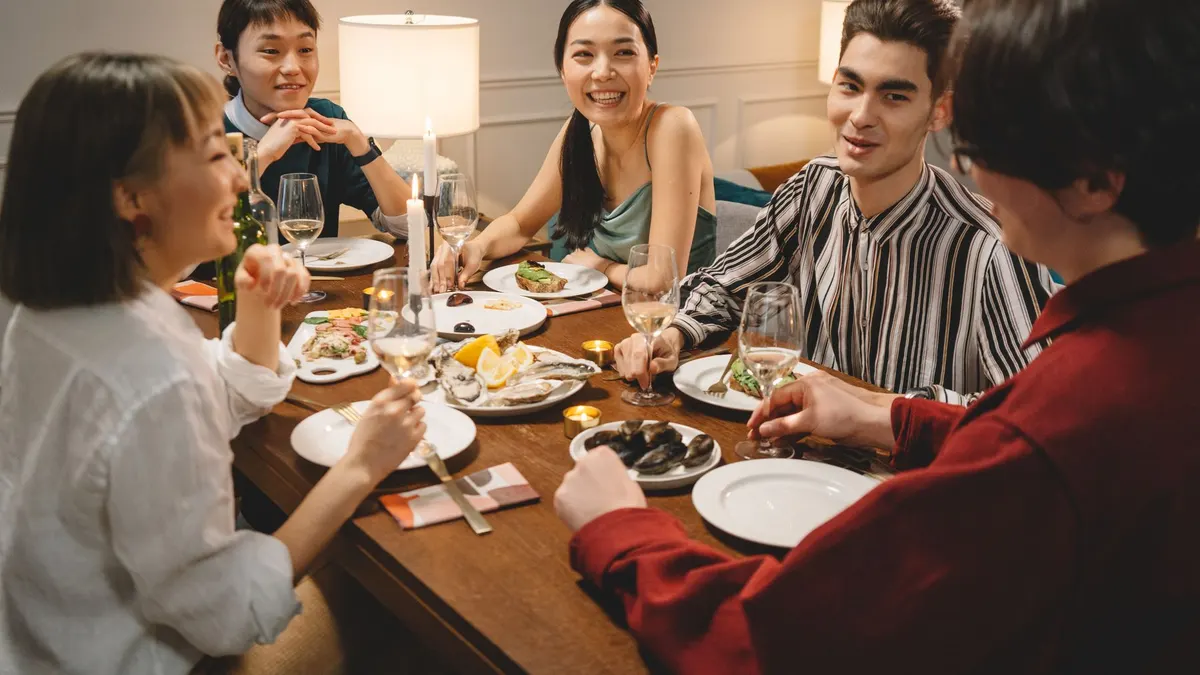
Gallup and Meta released a global survey this week covering roughly 142 countries, and the headline number is not what most programme designers expect: 72% of people surveyed said they feel very or fairly socially connected. That is something like 3.2 billion people across the countries covered. A companion Gallup release put global loneliness at 24%, concentrated among adults aged 19 to 29.
Read together, these numbers should worry anyone running a general-purpose “meet new people” programme. Most people are not lonely. The problem is concentrated, and it is concentrated in groups defined by age, life stage, and isolation from existing networks rather than spread evenly across a population. A programme built to lift connection for everyone in a room is, by construction, going to spend most of its capacity on people who already had what they came for.
The failure mode: the open-door mixer
Call it the open-door problem. A funder or employer decides loneliness is a priority, and the response is a recurring social event — a mixer, a coffee morning, a “connection night” — open to anyone who wants to come. It gets promoted through the same channels that promote everything else: newsletters, posters, word of mouth. Attendance looks healthy. The organisers report success.
What actually happened, most of the time, is that the event filled with people who were already reasonably connected and simply enjoy this kind of thing. The AARP Foundation’s 2018 survey of adults 45 and older found that the strongest predictors of loneliness were the size and diversity of a person’s social network and physical isolation — not a general deficit in opportunities to socialise. People with thin networks do not show up to open events at the same rate as people with thick ones, because showing up to an unstructured room full of strangers is exactly the skill that a thin network leaves you short of. The AARP data made this concrete: 61% of people who had never spoken to a neighbour were lonely, against 33% of those who had. The barrier is the first conversation, not the existence of an event.
Robert Putnam’s account of declining civic participation in Bowling Alone describes the same mechanism at the level of a whole society: the informal, low-effort social infrastructure that used to produce casual contact — bowling leagues, church groups, clubs — eroded, and general invitations to “come and socialise” cannot substitute for it, because they still require the initiating step that isolated people are least equipped to take.
What the evidence says works instead
Two bodies of evidence point the same direction. First, the Harvard Graduate School of Education’s 2021 survey found loneliness is unevenly distributed by life stage: 61% of young adults aged 18 to 25 reported serious loneliness, as did 51% of mothers with young children, against a general population rate of 36%. Second, a 2022 qualitative meta-synthesis of social prescribing published in BMC Health Services Research found that participants described benefit going beyond social contact itself — what mattered was restored meaningful participation and purpose. Structured, purposeful activity outperformed unstructured contact.
Put those together and the design implication is specific: a programme aimed at reducing loneliness works better when it targets a defined group with a shared reason to be there, and gives them something to do together, rather than assembling a general audience around the vague task of talking to each other.
| Claim | Evidence status |
|---|---|
| Most people, globally, feel socially connected | Solid — Gallup/Meta 2023, large multi-country sample |
| Loneliness is concentrated in specific groups (young adults, new mothers) rather than spread evenly | Solid — Harvard MCC 2021, AARP 2018 |
| Structured, purposeful group activity produces more benefit than open-ended social contact | Moderate — qualitative synthesis, not controlled trials |
| Open general-audience events under-recruit the people who most need them | Plausible inference from network-size and barrier data, not directly tested |
What this means in practice: before you fund or run a “connection event,” name who it is for and what they will do together, not just where and when they should show up. A recurring interest-based group with a task — a walking group, a repair café, a parent-and-baby session — recruits along the lines of shared need rather than pre-existing confidence. Platforms like Meetup have built an entire model, at roughly 60 million members, around exactly this: interest first, socialising second. That structure does some of the recruiting work that an open invitation cannot.
What this does not solve
None of this addresses the more basic reach problem. Even a well-targeted interest group still depends on someone finding it, deciding to attend, and getting through the door once. The people documented as most isolated in the AARP and Harvard data — those who have never spoken to a neighbour, new mothers cut off from prior networks, isolated older adults — are also the people least likely to encounter a flyer for a walking group or sign up for an app-based meetup. Designing a better room does not solve the problem of who hears about the room. That is a separate, harder problem, usually solved through referral relationships — a GP, a health visitor, a workplace manager — rather than through the programme’s own marketing, and it deserves its own design work, not an afterthought bolted onto the event itself.
Sources
- The State of Social Connections
- Almost a Quarter of the World Feels Lonely
- Loneliness and Social Connections: A National Survey of Adults 45 and Older
- Loneliness in America: How the Pandemic Has Deepened an Epidemic of Loneliness
- Do People Perceive Benefits in the Use of Social Prescribing to Address Loneliness and/or Social Isolation? A Qualitative Meta-Synthesis
- Meetup: Interest-Based In-Person Group Events
- Bowling Alone: The Collapse and Revival of American Community